As I explored different positions within the animation industry, I gradually realised that I am especially drawn to two interconnected roles: Character Design and Storyboarding. These positions respectively shape how characters are constructed and how stories are visually communicated, and both resonate strongly with my previous creative experience. They not only define the style and tone of a project, but also influence how audiences perceive emotion and narrative—making them key areas I hope to develop further in the future.
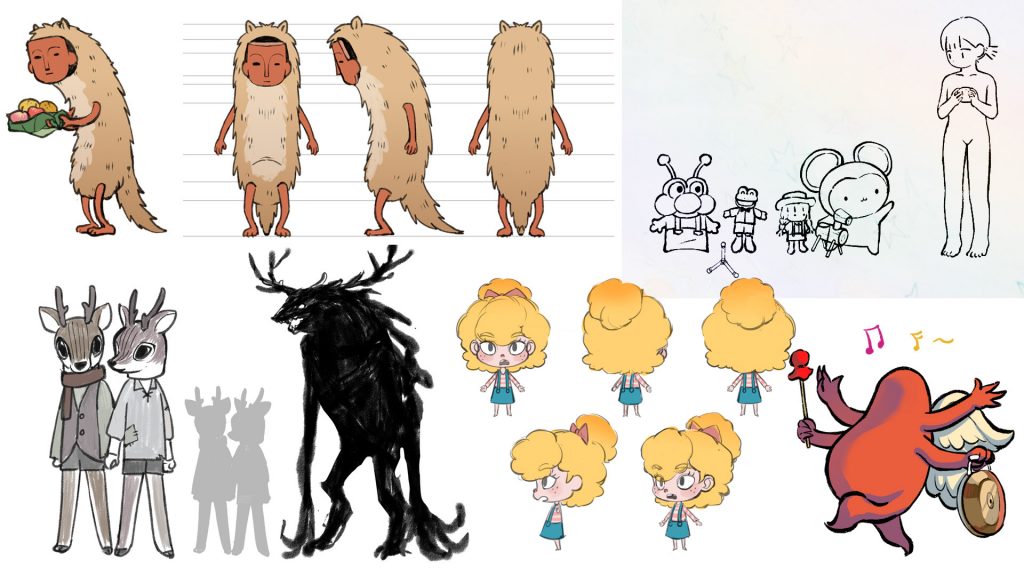
Character designers are responsible for establishing the visual language of characters, including shape language, proportions, expressions, costumes, and pose design. They also produce model sheets, expression sheets, and ensure that characters remain animatable and stylistically consistent across different scenes. Strong character design must balance visual appeal with narrative clarity. My interest in this role comes from my own experience designing characters across various projects. In my work, character designs always evolve in response to the story’s background, tone, and thematic intentions. For example, when creating a fairytale-like adventure, I prefer distinctive shapes and clean, bright lines and colours to emphasise a sense of playfulness. In contrast, for first-person emotional narratives, I shift toward softer, rounder lines and lower colour contrast, allowing the character to blend harmoniously into the overall emotional atmosphere.
Storyboard artists transform scripts into visual storytelling, shaping composition, pacing, camera movement, character acting, and the overall flow of scenes. This role requires a strong understanding of cinematic language, timing, emotion, and spatial relationships, as well as the ability to draw quickly and clearly. I am drawn to storyboarding because it determines the rhythm and emotional trajectory of a story from its earliest stage, directly influencing how the audience understands and connects with the characters. When constructing storyboards, I focus on aligning visual decisions with a character’s personality and emotional state. Beyond clear storytelling, I adapt the camera language to suit the protagonist’s traits. For instance, when working with stories featuring children or small animals, I often use low-angle shots, strong perspective, and more dynamic scene transitions. In contrast, for first-person emotional narratives, I adopt steadier, more intimate shot choices that stay close to the character’s viewpoint.
In my industry research, I consulted ScreenSkills’ professional descriptions of both roles and watched talks from See No Evil to understand how these positions operate within real production pipelines. Reviewing studio showreels and job listings also helped me identify essential skills, such as proficiency in Photoshop or Storyboard Pro, visual clarity, and strong communication abilities.
Overall, studying these two roles has confirmed my interest and potential in both character expression and visual storytelling. Moving forward, I aim to continue practising character design, composition, gesture, and shot pacing, gradually building the skills required to contribute to story-driven creative teams.
Leave a Reply