Over the past two years of studying animation, I have gradually completed some works and also done many additional exercises. However, they were usually very fragmented, so recently I have been trying to organise my portfolio from the past two years. In order to make the portfolio clearer and more targeted, I made a simple classification of my existing works.
One part consists of stories built around characters. These works usually contain more detailed character design sheets and turnarounds. While organising them, I also noticed that I am better at stylised cartoon characters and animal character design.
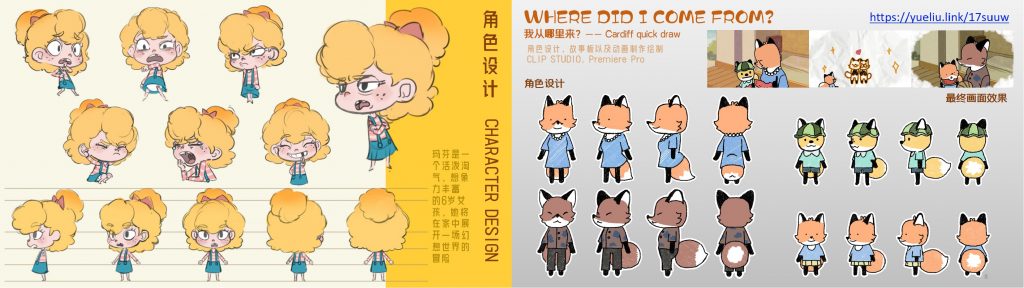
Another part of my animation works contains characters that are more tightly bound to the stories themselves. I usually prefer using more simplified and line-based designs to tell these stories.
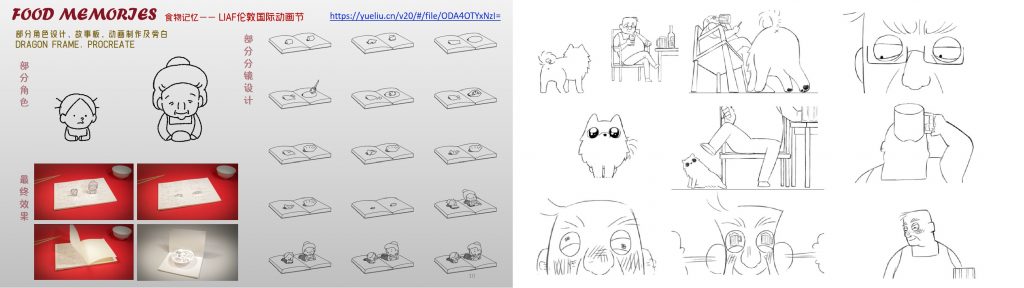
I discovered that I use different visual languages in different kinds of projects. For more character-driven works, I pay more attention to the character design itself; while for stories that focus more on emotion and atmosphere, I tend to use simplified and line-based visuals, allowing the audience to focus more on emotion and storytelling rhythm. How to balance these two approaches and integrate them into a more complete work may be what I should do next.
During the process of organising my portfolio, I always felt that there was still room for improvement, so I communicated with an industry professional, Julie, and received many suggestions regarding portfolio structure and future direction. Although I currently lean more clearly towards character design and storyboarding, she also showed me the recruitment requirements of many animation studios and companies. Through this, I realised that even pre-production focused positions often require some 3D production abilities, such as modelling, rigging, or creating simple 3D showreels.
In comparison, my current portfolio still focuses more on 2D and pre-production content, lacking more complete 3D projects. This also made me rethink how to further improve and complete my technical abilities and portfolio structure while still maintaining the storytelling and character design direction that interests me more.
Through these conversations, I began to realise that a portfolio is not only about showing “what I like to do”, but also about considering “what I am capable of doing”, and how to present my abilities and direction to the industry more clearly.
Leave a Reply